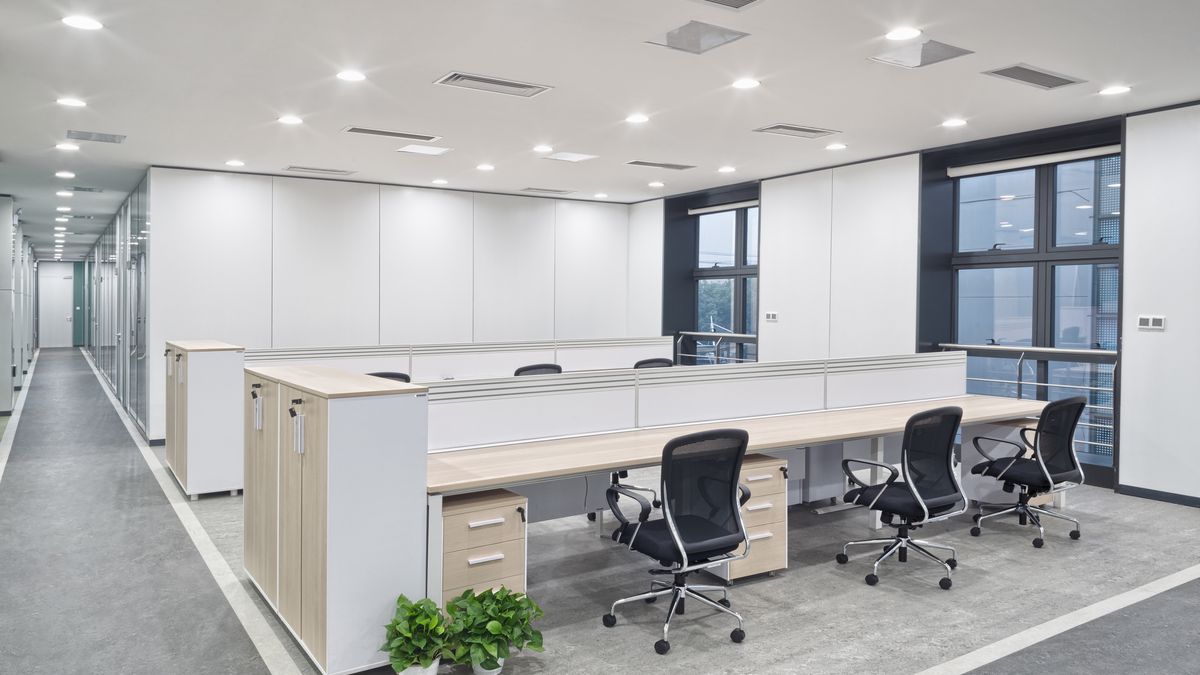
Whether you are setting up a home office for remote work or planning a workplace in a commercial building where everyone (apart from the boss) works in an open-plan space, the lighting should meet the needs of people who spend several hours a day at a computer. This seemingly minor detail affects both our ability to perform mental work effectively and the health of our eyes.
Poor lighting design, the wrong colour of light or an insufficient number of lumens can make us uncomfortable. From there, it is only a short step to losing motivation, struggling to concentrate and taking much longer to complete assigned tasks. Set up the desk, choose a comfortable chair and, above all, make sure the lighting is right. The information below explains how to do this efficiently and comprehensively.
Consequences of Poor Lighting Choices
Without knowing how poor lighting affects us, it can be difficult to judge whether its quality is adequate. Some of the symptoms may be caused by fatigue, too little sleep, illness or even current events in our personal lives. If all of these factors can be ruled out, it is worth checking objectively whether we are experiencing:
- a persistent decline in concentration,
- feeling unwell at work regardless of how we felt beforehand,
- reduced accuracy and engagement in tasks, resulting in lower productivity,
- health problems (dry eyes, apathy, reduced visual acuity and drowsiness).
Colour Temperature
When we consider the time of year and day when sunlight feels best, clear summer mornings, when daylight remains bright for many hours, quickly come to mind. It is therefore unsurprising that lighting research generally identifies neutral white as the most suitable shade for supporting concentration at work. It contains a moderate proportion of blue light and renders natural colours accurately. This kind of light is less tiring for the eyes and is the closest artificial equivalent to natural daylight, which is particularly important in autumn and winter, when we rely heavily on artificial lighting. By stimulating the brain, it helps the body remain alert and ready for effort until warmer, yellow-toned light signals that it is time to relax. Ideally, the desk should be placed beside a window. If that is not possible, bulbs with this colour temperature should work well.
Artificial Office Lighting
An office generally requires two main types of lighting: general lighting and task lighting for the desk. LED technology is a practical choice for a complete setup because it offers a wide range of white tones and allows the intensity of different parts of the spectrum to be adjusted. For both general and task lighting, remember that a low price can mean poorer light quality. Research indicates that up to 40% of lamps of this type available on the Polish market may fail to meet safety standards to varying degrees. If in doubt, ask the retailer or at least check the packaging for the bulb's certification marks. The main light should be diffused, and no lamp should cause glare.